Do you miss having a quiet place to study free from pets, kids, and noisy roommates? Are you preparing to take the bar and keep getting interrupted in the middle of a cram session? Normally, the McGeorge library would be the first place students turn to. However, with COVID-19 likely keeping much of the campus shuttered for the next few months (at least), students must now look to outside services. In Sacramento, there are many co-working spaces outside McGeorge that offer a quiet place for students to work alone or with small study groups.

One location that’s popular with current students is the aptly named co-working office, The Spot. Located on 12th Street and under a mile from Capitol Park, The Spot provides a quiet space for students and working professionals alike. Be sure to ask about the student rate for a monthly desk ($60/month), which isn’t advertised online.

Continue Reading A Study Space Away From Home

For many, the first months of being in the part-time program at McGeorge can feel overwhelming. You may have thought that “part-time” meant “half-time” (and that you would be doing half the work of the full-time students), but this isn’t the case.  Virtually the whole of the part-time cohort had spinning heads during the fall semester, as we pushed and clawed to keep up the pace. We hope the future incoming part-time 1L’s can learn from our struggles. The following are some tidbits of wisdom that my cohort wanted to share:

  • Stick to your schedule to make sure everything gets done. This includes work, school, personal time (if you can fit it in), and office hours (office hours are crucial: you will learn things that you cannot get during regular class time because students often have insightful questions they are too shy to ask in class). You must be self-disciplined, and be prepared to be exhausted.
  • One of the biggest challenges is accepting that your social life will be the biggest area in which you are going to have to make cutbacks. While this is also true for full-time students, it seems especially true for part-timers because what little free time we had after work has been consumed to make room for school.
  • Build in time to decompress, even if it is only 30 minutes. It shows in your work if you don’t. While it doesn’t have to be exercise, remember endorphins are great for battling depression, and some days you are going to feel depressed.

Continue Reading A Part-Time Student’s Survival Guide

Julienne Correa, 2L (Class of 2022)

Growing up, I didn’t know anything about law school. I remember researching “how to become a lawyer” and immediately closed the tab because it looked too intimidating.

When I started undergrad at UC Davis, I decided to get involved with student government. I met a lot of students majoring in political science and international relations. They were pre-law, I was pre-med. After freshmen year, I realized that I just could not put myself through another science or math class; no matter how much I studied, I struggled with the concepts. I realized it was because I lacked the motivation to pursue a career in the medical field. It was my parent’s dream, not mine.

Coming from an immigrant family, I was terrified to fail. Failing meant disappointment to my parents. Disappointment to all their struggles to get me to a four-year university. The medical field was all I had ever known and what I told them I wanted to do, but I was not passionate about it.

As I continued getting more involved in student government, I realized I enjoyed advocacy. I liked helping people and advocating for important structural change. Many of my colleagues were pre-law and they gave me great advice on how to prepare for law school. I was also happy to find that, unlike being pre-med, I was not required to take specific courses. I chose two majors that I greatly enjoyed, Sociology and Psychology.

Continue Reading Why I Went to Law School

Are you ready to save some tuition money? All McGeorge students are currently eligible to apply for three scholarships for the upcoming school year. Click here to view a list of the available scholarships and their deadlines. These scholarships are open to everyone.  Even if a merit scholarship is lost, this is an opportunity for all students to supplement their financial aid package. (And it can be earned back for the 3rd and/or 4th year of law school, which is a unique McGeorge opportunity.)

The following forms are due on Monday, March 8, 2021 to the Financial Aid Office:

1)   Pre-filled FAFSA or FAFSA (2021-2022) | (Note: 2019 tax form.  We suggest you use the IRS data retrieval tool when completing your FAFSA)

2)  JD Scholarship application (2021-2022)

Please note that late applications will not be accepted, so be sure to get your forms in order ASAP!

The McGeorge Alternative Summer Advantage Program (“McGeorge ASAP”) is a self-directed volunteer summer legal research project created by alum Lexi Purich Howard and Asst. Dean of Career Development Molly Stafford in response to COVID-19.  The program matched McGeorge students who lost summer opportunities due to the pandemic with local attorneys for guidance on a research project on the topic of the student’s choosing.  This week’s ASAP paper was authored by Mike Della Maggiore (2L, 2022) under the mentorship of Allison Cross, a defense attorney for the Placer County Public Defender’s Office, Koukol & Associates.

“In today’s political climate, police conduct has never been under such watchful eyes. The Black Lives Matter movement has directed the attention of every observant American to the systemic discrimination our country perpetuates. But what about the processes that lie beneath the surface, out of view of even the most vigilant? Entrapment is the result of undercover police conduct, but in California entrapment is defined as law enforcement conduct likely to induce a normally law-abiding person to commit the offense. This article serves not to argue the legality of affirmative police conduct or its justifications but seeks to explore California’s current entrapment defense standard and the discriminatory patterns therein. This article begins with the history of the entrapment defense and how different standards evolved. This article will then explain California’s current standard and its shortcomings, specifically, how it produces patterns of discrimination based on race, socio economic status, and gender. This article then posits California should enact a different test to avoid the discrimination currently perpetuated by this practice…”

Read the full article here.

Nikki Kuklo (1E), class of 2023

I am entering my second semester of law school in the part-time program… Who would have thought that would happen for me?! I am 30 years old and have been a horse trainer since I was 10 years old, or at least that was when my mom put a receipt book in my hand and taught me how to start charging my client. So, one might say that my experience so far has been a complete and utter culture shock. I was filled with so much doubt regarding my ability to integrate into this wholly new way of thinking and doing things.

One thing you learn early in training horses is that horses need constant care and diligence. There is never a day off because, at a minimum, horses need to be fed and watered. This holds true for law school as well. As Professor Telfeyan reminded my GLS I class frequently, daily diligence is key.

Continue Reading Life as a Remote Part-Time Law Student

Source: Equal Justice Works

Are you interested in a career in public interest law? Have you considered becoming an Equal Justice Works Fellow? EJW is currently accepting applications for two summer fellowships:

  • Rural Summer Legal Corps (due February 8, 2021): Partnering with Legal Services Corporation (LSC), Equal Justice Works provides law students with an opportunity to serve rural communities by providing direct legal services such as affordable housing and farmworkers’ rights, engaging in community outreach and education, and supporting resource development and training sessions. The fellowship will take place over the course of eight to ten weeks.
  • Disaster Resilience Program (due February 16, 2021): As a Student Fellow, accepted applicants will provide free civil legal assistance to disaster-prone areas, such as Texas and Florida. Student Fellows will assist an Equal Justice Works Fellow in improving disaster preparedness and recovery from natural disasters, as well as things such as the current COVID-19 pandemic.

All 1L and 2L students are encouraged to apply to these exciting opportunities, where you will gain invaluable experience and strengthen your legal network. Learn more about the available fellowships here, and be sure to have your resume reviewed by the CDO by emailing us at lawcareers@pacific.edu. For those interested in working with non-profit and government agencies, be sure to also attend the Equal Justice Works Conference and Career Fair this October, the largest public interest career fair and interview program in the country. More information will be released later this year.

Lawyers come from all walks of life. For some, the law is in their blood – their father was a lawyer, their mother was a judge, their grandfather was a police sergeant, etc. For others, the life of a lawyer became the ultimate goal after witnessing injustices in their community and wanting to make a change for the greater good. Some lawyers may have been drawn by the intricacies of law and the precision required to become a top-tier litigator, and yet more may have simply grown tired of their previous career and were searching for a new challenge. Whatever the case may be, the unique experiences and backgrounds that are brought to law school can be used to become a better and more effective lawyer, regardless of how far from law they may first appear.

James “Jamie” Holland

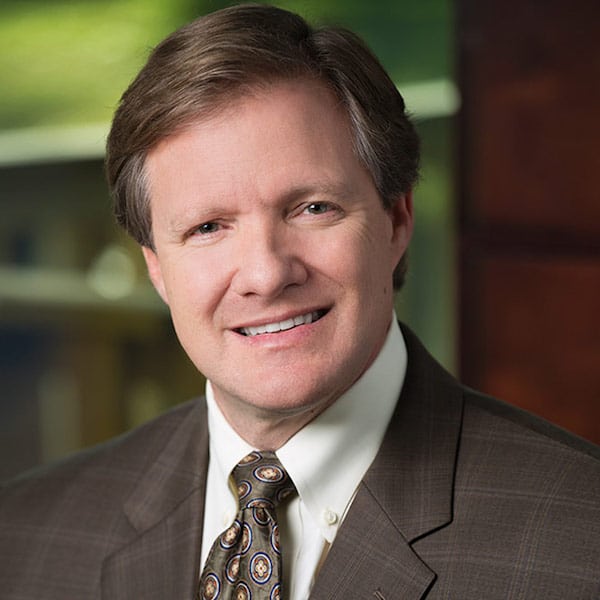
For example, see this recent article from ABA Journal about TV-star-turned-lawyer, James “Jamie” Holland. He’s used common practices from his acting career to become a more effective trial lawyer – things like telling a story to the audience (i.e. jurors) rather than just the dry facts, rehearsing and recording his arguments to critically analyze any instances where he appears uncertain or hesitant, analyzing whether or not his body language and vocal cadence are conveying the same confidence in his argument that he feels, and more. He shared several tips on how to become a more convincing lawyer, which any trial lawyer can use to their benefit.

Check out the article above and see how you can implement some of his tips to improve your trial advocacy skills.

Sacramento County Bar Association

As we wrap up 2020 and head into a new year, be sure visit the Sacramento County Bar Association and get your free 2021 Student Membership! You’ll gain access to all the SCBA’s virtual events, as well as legal resources to help you on your career path. It only takes a couple minutes to get set up, so what are you waiting for?

Kelli Sanshey, 2L (Class of 2022)

The McGeorge Alternative Summer Advantage Program (“McGeorge ASAP”) is a self-directed volunteer summer legal research project created by alum Lexi Purich Howard and Asst. Dean of Career Development Molly Stafford in response to COVID-19.  The program matched McGeorge students who lost summer opportunities due to the pandemic with local attorneys for guidance on a research project on the topic of the student’s choosing.  This week’s ASAP paper was authored by Kelli Sanshey (2L, 2022) under the mentorship of Khoa Ngo, an attorney for the California Department of Health Care Services. This paper was written during the summer of 2020 and prior to the passage of Assembly Bill 5; however, Ms. Sanshey’s insights on the issues remain pertinent and will inform how we watch these court cases as they move forward.

“Assembly Bill No. 5 (“AB 5”), signed into law by California governor Gavin Newsom on September 18, 2019, adds Section 2750.3 to the CA Labor Code. AB5 clarifies the legal designation of an employee or independent contractor, codifying the California Supreme Court Decision Dynamex Operations West, Inc. v. Superior Court of Los Angeles. Dynamex implemented a three-pronged test, also known as the “ABC” test, which presumes that workers are employees unless they are exempt, or the employer can demonstrate that:
(1) the worker is free from the control and direction of the hiring entity in connection with the performance of the work, both under the contract for the performance of the work and in fact;
(2) the worker performs work that is outside the usual course of the hiring entity’s business; and
(3) the worker is customarily engaged in an independently established trade, occupation, or business of the same nature as the work performed.

A number of private companies, including Uber, Lyft, Doordash, Postmates, and Instacart, have responded to AB5 by placing Proposition 22 on the ballot for the November 2020 election. Popular initiatives allow California voters to overturn a law passed by the California government, or to circumvent a Supreme Court ruling…”


Read the full paper here.